

For buyers of botanical raw materials, a good sample is no longer enough. Procurement, quality and R&D teams in cosmetics, food and pharma need to know where every batch comes from, how it was handled and how it tested. That is why, in 2026, traceability has been the area where we have pushed hardest as part of our continuous improvement work at Ivoire Essentials.
This article explains how our traceability system works today, how we control quality from origin to export, and what we are building for the 2027 season.
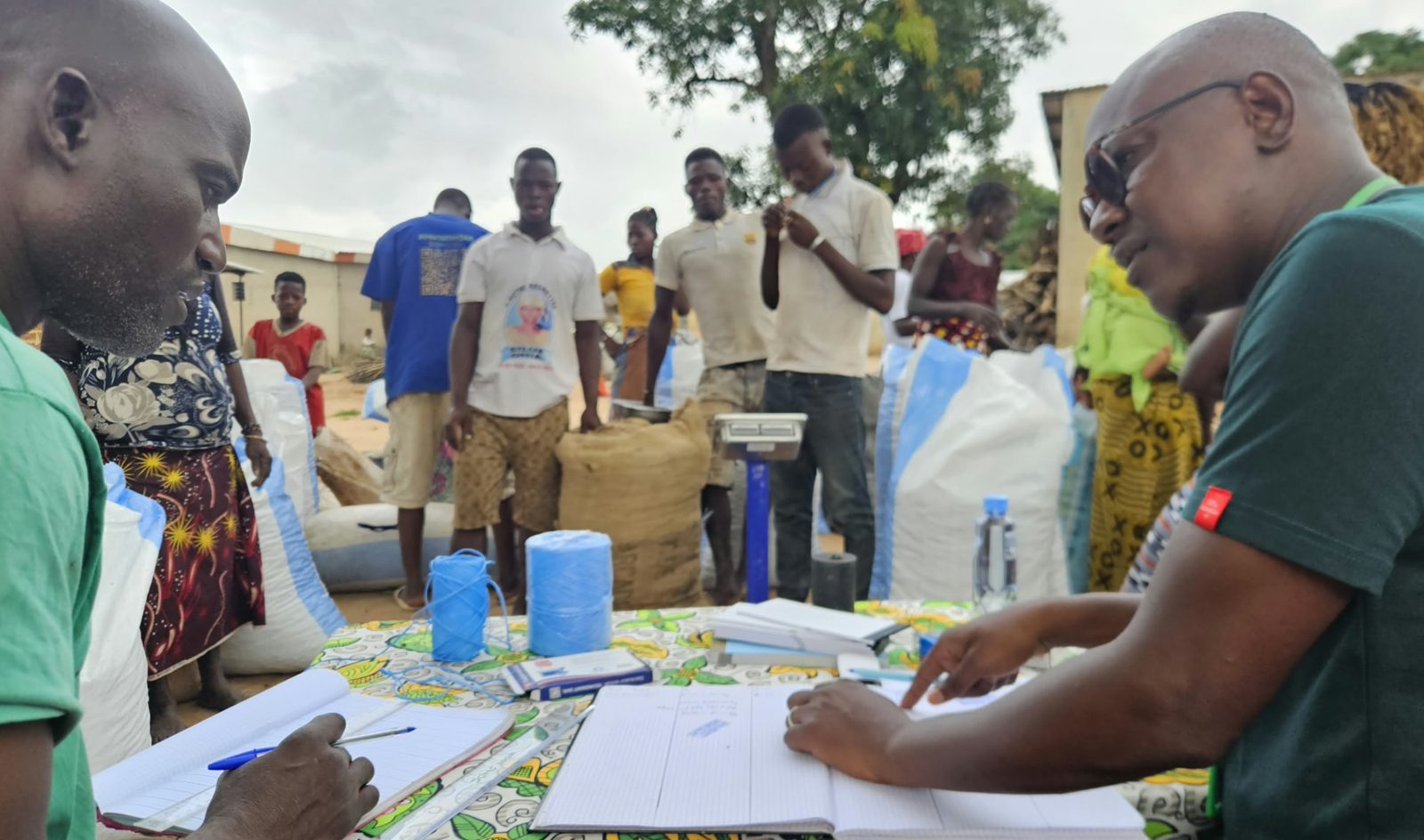
Why traceability matters for African botanicals
Natural ingredients such as annatto seeds, shea butter, grains of paradise or griffonia are harvested by many growers. Without a clear system, material from different origins can be mixed, and when a problem appears it becomes impossible to find its source.
Regulation also keeps raising the bar. In the European Union, food ingredients must meet the maximum residue levels (MRLs) for pesticides set by Regulation (EC) No 396/2005 and the contaminant limits, including heavy metals, set by Regulation (EU) 2023/915. Cosmetic ingredients fall under Regulation (EC) No 1223/2009. Other destination markets have their own rules, such as those set by the FDA in the United States or by regulators in Asian countries. For our clients, traceability is what makes compliance verifiable rather than assumed.
One code, from the bag back to its origin
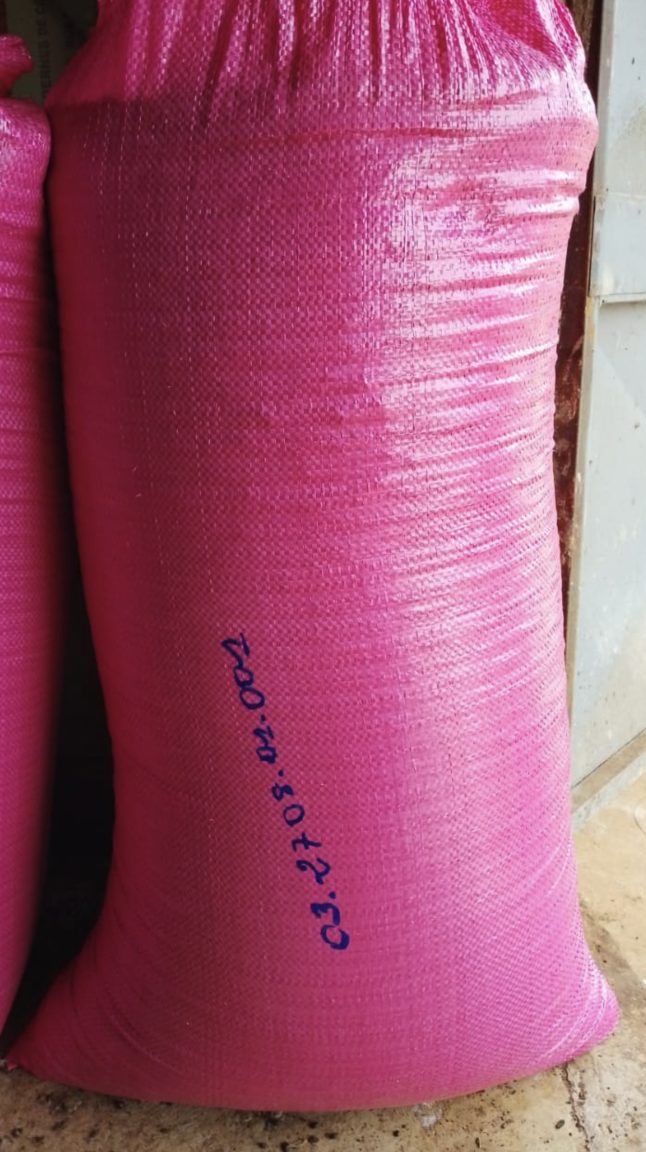
Every batch we prepare receives a unique traceability code, and every bag in that batch is identified with it. The code links the bag to:
- its origin: the area and the grower group or Excellence Grower it came from;
- its handling: processing, drying, cleaning and storage conditions;
- its characteristics: the quality analyses carried out on that batch.
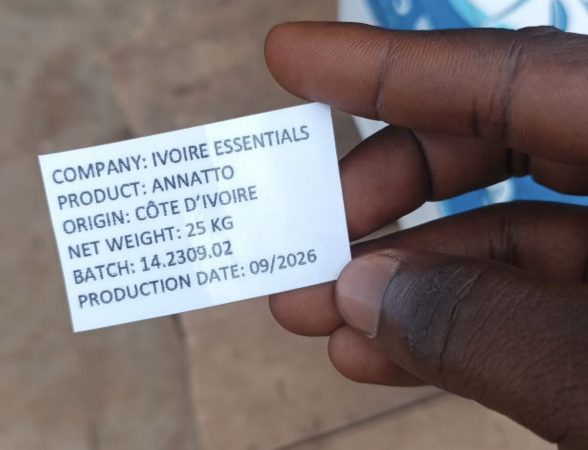
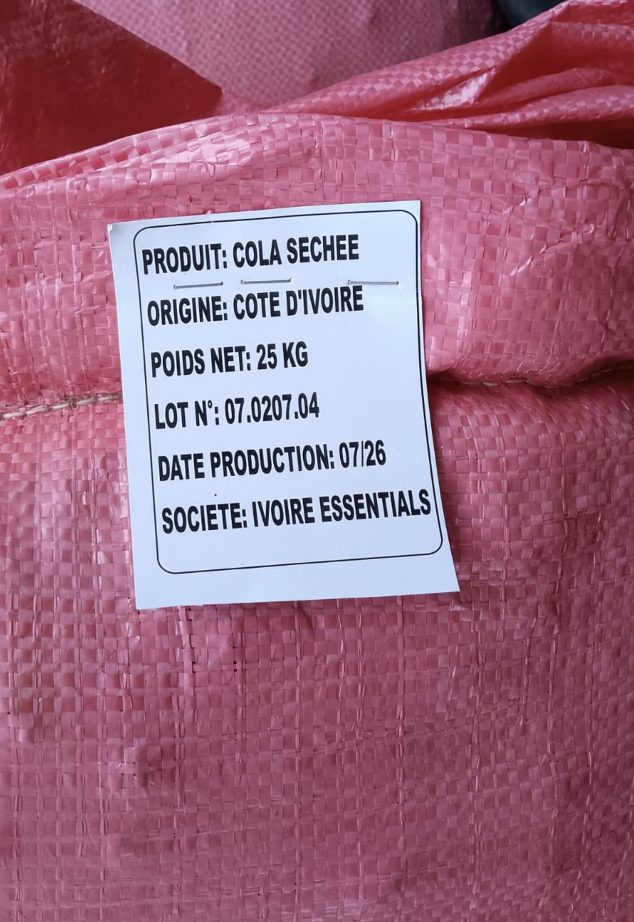
If a client asks about a specific bag, we can trace it back to where it came from and show how it tested.
Controls at every stage of the value chain
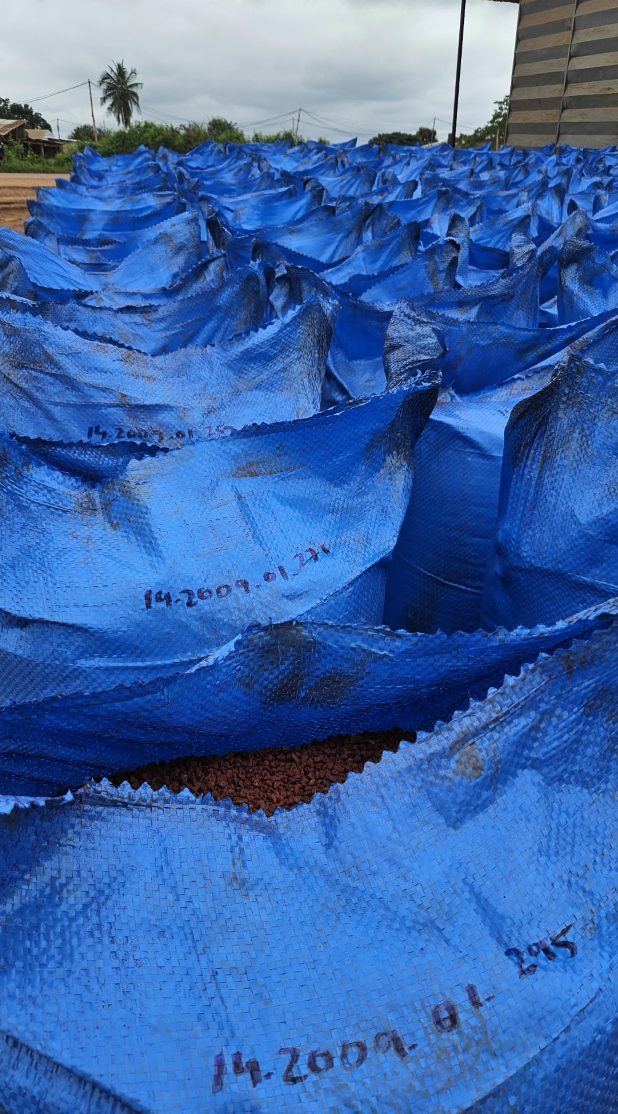
Our teams stay in the field throughout the crop cycle and supervise each stage of post-harvest processing. Before any batch is exported, it goes through a series of checkpoints, described in more detail on our company page:
- batch identification;
- on-site quality control;
- traceability follow-up;
- packaging inspection;
- pallet supervision before loading.
Laboratory testing: MRLs and heavy metals
Field checks are only part of the picture. We regularly send samples to certified laboratories to test for pesticide residues (MRLs), heavy metals and other parameters, and we check the results against the requirements of the market each batch is going to.
The results are linked to the batch code, so the analytical data travels with the material. Clients can request the relevant documentation together with the technical sheet for each product.
Testing at origin: faster answers for the 2027 season
One limitation of external laboratories is time: samples have to be shipped and results can take weeks. This year’s focus on traceability has led us to invest in our own means of control at origin, so that we can check key quality and internal parameters of the product close to the harvest, without long delays. This means we can sort and select material earlier, and make better decisions before a batch is prepared for export.
What this means for our clients
- Documented material: every batch can be traced and backed by analysis.
- Consistency from season to season: knowing our value chains better helps us keep specifications stable.
- Fewer surprises at reception: problems are found at origin, not in your warehouse.
- Room to grow: this work has already helped us expand programs with existing clients and start new ones.
We are getting ready for the 2027 season stronger, more reliable and with a better understanding of every link in our chain. This applies across our range, from annatto seeds and unrefined shea butter to grains of paradise, griffonia seeds, cola nuts and voacanga.
Would you like to see the traceability and analytical documentation for a specific product? Contact our team to request a technical sheet.
 English
 French
 Spanish
 Portuguese
 Chinese